In the hyper-accelerated landscape of 2026, the graveyard of failed startups is paved with polished, feature-rich products that nobody actually wanted. The traditional "build it and they will come" philosophy has been irrevocably dismantled by a market that demands immediate utility and seamless execution.
If you are a founder or an enterprise leader with a visionary concept, your greatest risk isn't technical failure: it’s market irrelevance. Spending six months and hundreds of thousands of dollars on a full-scale build before validating your core assumptions is no longer a strategic move; it is a fundamental business error.
To win, you must move faster. You must engineer a prototype that serves as a diagnostic tool, not just a visual placeholder. At Gotogler Technologies, we specialize in this high-stakes transition from concept to validated reality. Here is the definitive guide to the fastest way to build a prototype that actually validates your business idea.
The Lethal Myth of "Feature Completeness"
Most businesses fail at the prototyping stage because they mistake a prototype for a "mini-product." They attempt to include every "must-have" feature, inadvertently extending the development timeline and diluting the feedback loop.
A prototype is not a product; it is a question. Every button, screen, and workflow must be designed to answer one specific inquiry: Does this solve a high-value problem for my target user?
By shifting your mindset from "building features" to "testing hypotheses," you can reduce your time-to-market by an average of 15%. This lean approach allows you to identify and address critical design flaws before expensive manufacturing or web application development begins.

Step 1: Defining Absolute Validation Objectives
Before a single line of code is written or a wireframe is sketched, you must define what success looks like. Without rigorous validation objectives, your prototype is just a digital toy.
Ask yourself:
- What is the single most important action a user must take?
- What technical hurdle represents the biggest risk to the project?
- Is the primary goal to test usability, desirability, or feasibility?
By narrowing your focus, you ensure that your prototyping method matches your current stage. Whether you are exploring artificial intelligence integrations or a new SaaS platform, clarity at this stage is the difference between an elite launch and a costly pivot.
Step 2: Low-Fidelity Rapid Fire (Days, Not Weeks)
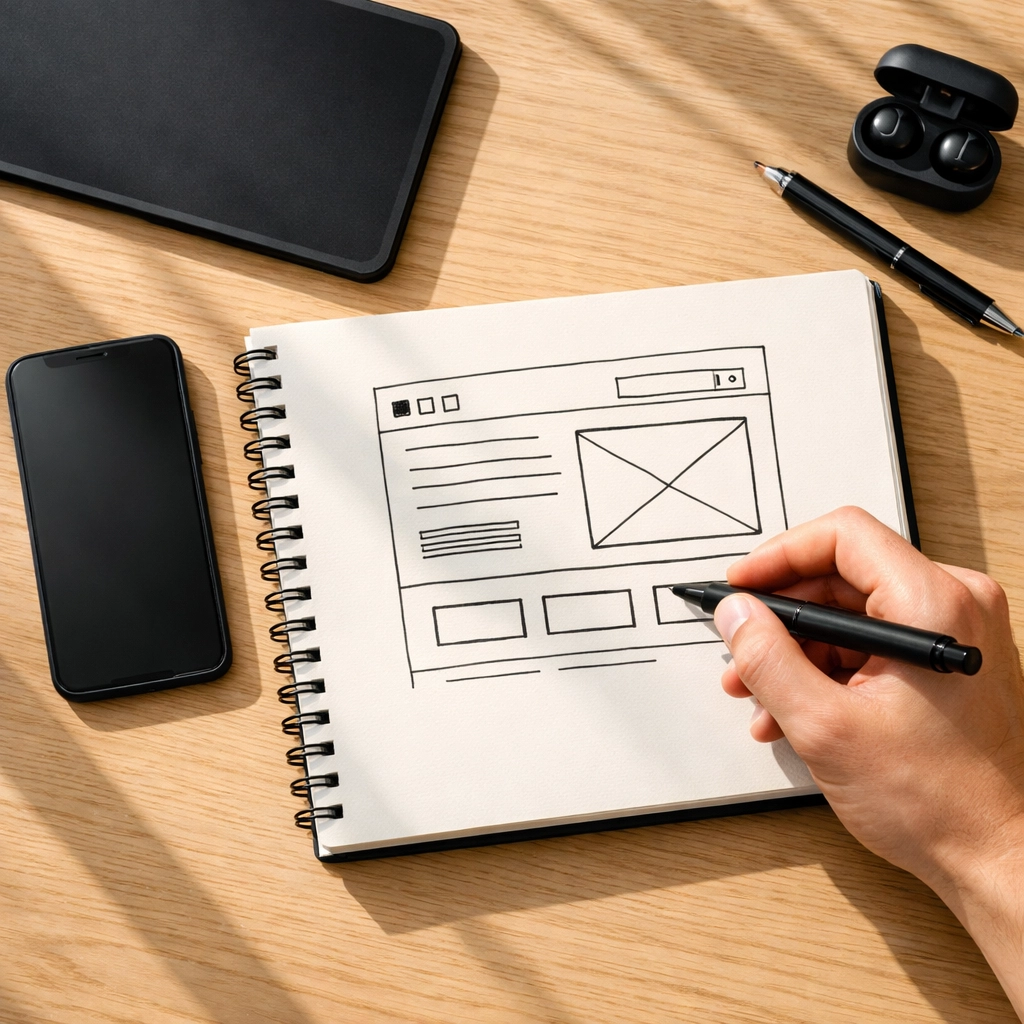
The fastest way to validate your business idea is to start with the simplest possible representation. Low-fidelity prototypes: including paper mockups, digital wireframes, and basic sketches: allow you to map out user flows without the distraction of aesthetic perfection.
This stage should take days. The goal here is rapid iteration. If a user struggles to navigate a paper sketch of your mobile app, they will certainly struggle with a coded version. Correcting these errors now costs pennies; correcting them during mobile app development costs thousands.
Why Low-Fidelity Works:
- Lower Emotional Investment: It’s easier to discard a sketch than a coded interface.
- Focus on Logic: Stakeholders and users focus on the "how" and "why" rather than the "colors" and "fonts."
- Speed: You can test five different versions of a workflow in a single afternoon.
Step 3: Interactive Validation and the User Feedback Loop
Once the core logic is solidified, it is time to transition to an interactive mockup. In 2026, tools for interactive prototyping have reached a level of sophistication where you can simulate complex digital experiences without a backend.
This is where you gather high-intent data. By putting a clickable prototype in front of potential customers, you can observe their behavior in a controlled environment. Does the user follow the "happy path" you designed? Do they understand the value proposition within the first five seconds?
At Gotogler Technologies, we advocate for elite stakeholder communication. Tangible prototypes make it easier for investors and partners to align on the vision, transforming abstract ideas into a strategic roadmap.
Step 4: Engineering the High-Fidelity Transition
If: and only if: your core assumptions are validated through low-fidelity and interactive testing, you advance to high-fidelity prototyping. This is where the product begins to look and feel like the final version.
For digital products, this involves high-fidelity UI/UX design that mirrors the intended digital engineering services standards. For physical products, this may involve 3D printing or CAD modeling to evaluate ergonomics and form.
High-fidelity prototypes are essential for:
- Final Usability Testing: Catching micro-interaction errors.
- Investor Pitching: Demonstrating "absolute digital confidence" to secure funding.
- Technical Hand-off: Providing a clear blueprint for the cloud and DevOps teams to begin the build.

The Gotogler Advantage: Linking Code to Market Success
Most agencies stop at the "build." We don't. A prototype that is technically sound but impossible to market is a failure.
Our unique methodology combines Product Development with Digital Marketing Strategy. While we are validating your tech stack, we are simultaneously analyzing your digital marketing funnel. We ask: How will this product attract users? What is the projected Cost Per Acquisition (CPA)?
By linking your code architecture to your marketing CAC (Customer Acquisition Cost), we ensure that your prototype validates the business model, not just the software. This is the "Full-Stack Partnership" that sets us apart from mere contractors.

Why Choose Gotogler Technologies for Your Prototyping Journey?
Building a prototype is easy. Engineering a strategic validation tool is difficult. As a leading technology consulting firm, we provide the technical brains and marketing muscle required to turn "ideas" into "assets."
- CTO as a Service: We don't just take orders; we provide high-level technical leadership to ensure your prototype is built for scale from Day 1.
- Speed & Precision: We utilize advanced workflows to reduce time-to-market, allowing you to fail fast or scale faster.
- End-to-End Excellence: From software testing automation to global deployment, we manage the complexities so you can focus on the vision.
FAQ: Rapid Prototyping for Founders
Q: How much should a prototype cost?
A: A prototype should cost a fraction of your total development budget. The goal is to spend the minimum amount required to answer your most pressing business questions.
Q: Should I use No-Code tools for my prototype?
A: No-code is excellent for simple validation. However, if your vision involves complex AI integrations or high-scale architecture, you need a prototype that can eventually transition into a professional codebase without a total rewrite.
Q: How long does the process take?
A: A low-fidelity validation can happen in 48-72 hours. A full interactive high-fidelity prototype typically takes 2-4 weeks, depending on the complexity of the business logic.
Transform Your Concept Into a Market-Ready Asset
The fastest way to build a prototype is to stop guessing and start measuring. Don't let your business idea remain a series of "what-ifs."
Are you ready to master your market and deploy a product that has been rigorously engineered for success? Or will you continue to gamble your capital on unvalidated assumptions?
Contact Gotogler Technologies today and let’s engineer your unfair advantage.